
Introduction
For distributors and wholesale buyers, knowing how to import safety matches in bulk can open the door to a profitable and reliable product business. Safety matches are an essential household item in many parts of the world, particularly in Africa, the Middle East, and parts of Asia where they are used daily for cooking, lighting candles, and various household purposes.
Because safety matches are low-cost, high-demand products, bulk imports are the most efficient way for distributors to supply their markets. Importing in large quantities helps reduce shipping costs, ensures consistent supply, and provides better profit margins for wholesalers and retail networks.
However, successfully learning how to import safety matches in bulk requires understanding the supply chain, product specifications, packaging options, and export procedures. This guide explains the key steps that distributors and wholesale buyers should follow when sourcing safety matches from international suppliers.
Why Import Safety Matches in Bulk?
- The demand for safety matches continues to remain strong in many developing markets. Everyday household use, commercial applications, and hospitality industries all require a steady supply of matches.
- When distributors import safety matches in bulk, they gain several advantages. Bulk purchasing reduces the cost per unit, allowing distributors to offer competitive prices in local markets. It also ensures that retailers and wholesalers always have sufficient stock available.
- Another advantage is consistency. Importing large shipments from a reliable manufacturer ensures that product quality remains the same across multiple batches, which is important for maintaining customer trust.
Step 1: Identify Reliable Safety Match Manufacturers
The first step to import safety matches in bulk is finding a trustworthy manufacturer or exporter. Many distributors source their matches from countries with well-established match industries.
India, for example, is one of the world’s largest producers of safety matches. Manufacturing regions have decades of experience producing cardboard matches, wooden matches, wax matches, and kitchen matches for international markets.
When selecting a supplier, distributors should evaluate several factors:
Manufacturing experience and industry reputation
Product quality and safety standards
Production capacity for bulk orders
Export experience and documentation support
Working with an experienced exporter helps ensure that the import process runs smoothly.
Step 2: Choose the Right Type of Safety Matches
Another important step when planning to import safety matches in bulk is choosing the right product type for your target market. Different regions may prefer different match styles depending on climate conditions, price sensitivity, and usage patterns.
Common types of safety matches include:
1. Cardboard Safety Matches
These are the most widely used matches for household purposes. They are affordable, lightweight, and easy to distribute through retail stores.
2. Wooden Safety Matches
Wooden matches offer longer burn time and stronger splints, making them popular in areas where durability and reliability are important.
3. Wax Safety Matches
Wax-coated matches are highly resistant to moisture and are commonly exported to tropical regions.
4. Kitchen Safety Matches
These extra-long matches are designed for cooking, candle lighting, and hotel or restaurant use.
Understanding the needs of your customers will help you select the most suitable match type for your market.
Step 3: Decide on Packaging and Private Label Options
Packaging is another key consideration when you import safety matches in bulk. Importers often request customized packaging to match their local branding and distribution requirements.
Many manufacturers offer multiple packaging options such as:
Standard BOPP wrap packaging
Paper label matchboxes
Custom printed labels
Export-grade master cartons
Private labeling allows distributors to place their own brand name on matchboxes, which helps build brand recognition in retail markets.
Custom packaging can also include different stick counts, box sizes, and carton quantities depending on buyer preferences.
Step 4: Understand Export Logistics and Shipping
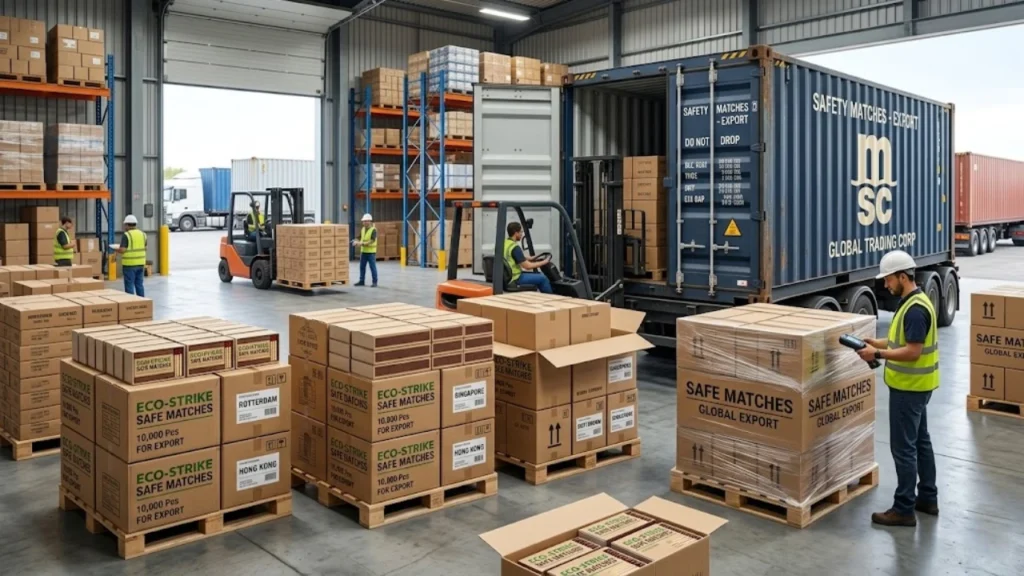
Logistics plays a major role when businesses import safety matches in bulk. Safety matches are usually transported in large quantities using container shipping.
A typical export shipment includes several thousand cartons packed securely in master export cartons designed for long-distance transportation.
Important logistics considerations include:
Port of dispatch
Shipping container capacity
Export packaging standards
Transit time to destination country
Experienced exporters often assist buyers with logistics coordination to ensure that shipments arrive safely and on time.
Step 5: Prepare Import Documentation
Proper documentation is essential when you import safety matches in bulk. Exporters usually prepare the necessary documents required for international trade.
Common export documents include:
Commercial invoice
Packing list
Certificate of origin
Bill of lading
Export inspection certificates (if required)
These documents ensure that customs clearance can be completed smoothly when the shipment reaches the destination country.
Distributors should confirm import regulations in their own country before placing orders.
Step 6: Request Product Samples Before Bulk Orders
Before committing to large shipments, it is always recommended to request product samples from the supplier. Testing samples helps buyers verify product quality, packaging design, and ignition performance.
When evaluating samples, distributors should check:
Match ignition reliability
Burn time and flame strength
Packaging quality
Label printing clarity
Testing samples ensures that the product meets market expectations before placing a full container order.
Step 7: Confirm Payment Terms and Delivery Schedule
The final step when preparing to import safety matches in bulk is confirming payment terms and production timelines.
Most exporters offer several payment options such as:
Letter of Credit (L/C)
Telegraphic Transfer (T/T)
Documents Against Payment (D/P)
Production time for bulk safety match orders typically ranges between two to four weeks depending on the order volume and packaging customization.
Clear communication with the supplier helps avoid delays and ensures that shipments are delivered according to schedule.
Why Many Importers Choose Indian Safety Match Exporters
- Many distributors worldwide choose Indian suppliers when they import safety matches in bulk. The country has a long history of safety match manufacturing and a well-organized export industry.
- Indian manufacturers produce large quantities of matches while maintaining competitive prices and consistent product quality. Export infrastructure, including major ports and logistics networks, makes international shipping efficient and reliable.
- Because of these advantages, Indian exporters have become trusted partners for distributors in Africa, the Middle East, and Latin America.
Conclusion
Learning how to import safety matches in bulk is an important step for distributors and wholesale buyers looking to supply reliable household products to their markets. Safety matches remain a daily necessity for millions of households, making them a consistent and profitable product category.
By selecting the right manufacturer, choosing appropriate match types, and managing logistics effectively, importers can ensure smooth international trade operations. With proper planning and reliable supplier partnerships, distributors can successfully build a long-term business around bulk safety matches imports.
As global demand for affordable household products continues to grow, businesses that understand how to import safety matches in bulk will be well positioned to serve expanding retail markets worldwide.