
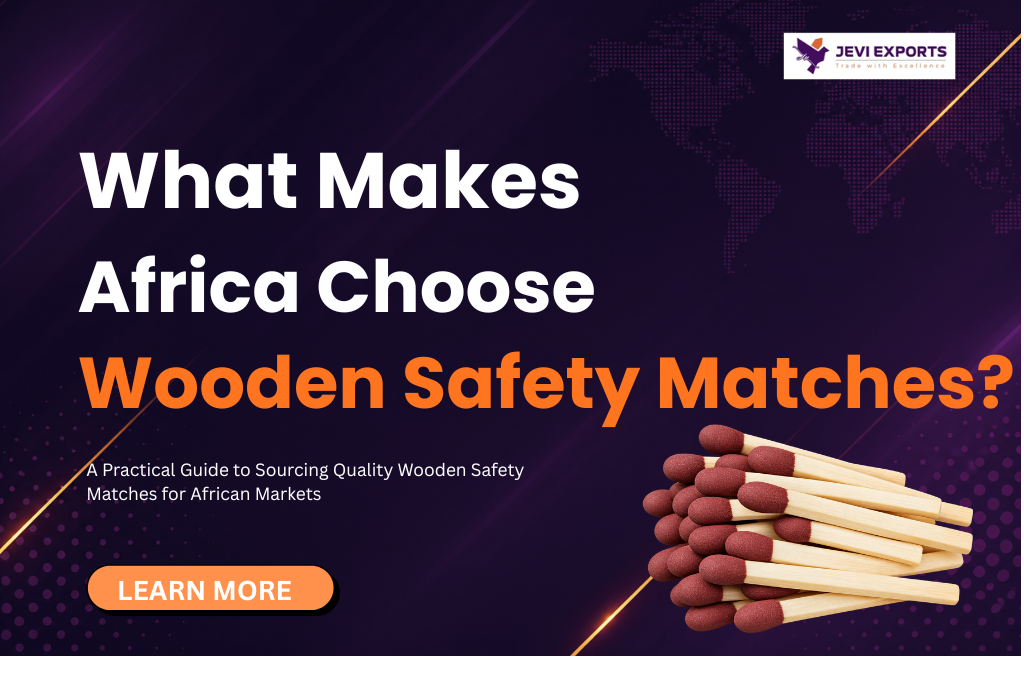
Wooden Safety Matches Export to Africa: A Sourcing Guide for Importers
Importing safety matches may look like a straightforward business decision. At the end of the day matches are a simple thing people use every day.. For African importers, wholesalers, distributors and retail businesses picking the right supplier is about more than just looking at the price.
The quality of the wood how well the matches light what is in the match head the packaging, how strong the boxes are the labels, how things are shipped and if the supplier is reliable can all change if an import order succeeds or fails.
India has a big match manufacturing industry. This makes India a great place for buyers who want products, at fair prices. For businesses thinking about safety matches export Africa finding a manufacturer or exporter who knows how international rules work can make buying much easier.
This guide will show what African importers should look for when buying safety matches from India. I will also explain how to check suppliers and what questions you should ask before you place an order.
Why Source Wooden Safety Matches from India?
India has a history of making and selling safety matches both at home and abroad. Many companies there use proven production methods, skilled staff, good packaging and strong export systems.
African buyers may find India an appealing place to source these matches for a number of reasons.
Competitive Manufacturing Costs
Because India has a well‑built manufacturing network and ready supplies of wood, workers and packaging its makers can produce safety matches at prices that are hard to beat.
When a wholesaler buys in bulk the lower cost can significantly boost their profit margins. Variety of Matchbox Designs
Importers can generally choose from different box sizes, designs, branding options, and packaging configurations.
Depending on the market, a buyer may request:
- Standard household matchboxes
- Long wooden matches
- Branded matchboxes
- Custom printed boxes
- Bulk cartons
- Retail-ready packaging
- Private-label matchboxes
This flexibility can help distributors create products that’re exactly what their target customers need.
Established Export Experience
A trusted safety matches exporter, from India can help buyers learn about documentation, packaging, shipment planning and other things related to exporting.
However importers should not think that every manufacturer has the export experience. Supplier verification is still important.
Understanding the African Safety Match Market
Africa is not one market. It is very varied.
The rules, for bringing goods in the tastes of people how goods are. How much they want products all differ from one country to another.
An importer who wants to bring items to Kenya, Ghana, Nigeria, Tanzania, Uganda, South Africa or any other African country must look closely at the place where they will sell before they finish an order.
Identify Your Target Market.
Before you talk to makers decide where the items will be sold. Ask yourself:
Identify Your Target Market
- Who are the primary customers?
- Will the matches be sold through supermarkets or small shops?
- Is the market price-sensitive?
- What box size is preferred?
What amount can actually be sold every month?
Knowing these things helps you pick a product instead of just going for the one that costs the least.
Look at the competition
Go to stores, supermarkets, wholesale places and online shops that serve your country. Look at:
- Matchbox sizes
- Number of sticks per box
- Retail prices
- Packaging quality
- Brand names
- Customer preferences
- Local and imported products
This simple research can help you create a more realistic purchasing plan.
What Makes a Good Wooden Safety Match?
Not all matches offer the same performance. A good product should provide consistent ignition while being safely packaged and suitable for everyday use.
For importers, product quality should be evaluated before committing to a large shipment.
Quality of the Wooden Stick
The wooden stick should be reasonably straight and properly processed.
Poor-quality sticks may:
- Break easily
- Produce excessive splinters
- Burn inconsistently
- Make ignition difficult
- Create an unpleasant customer experience
A reputable wooden safety matches manufacturer India should have quality checks throughout the production process.
Match Head Quality
The match head needs to ignite properly when struck against the appropriate striking surface.
Importers should request samples and test:
- Ignition consistency
- Burning time
- Flame stability
- Match head attachment
- Performance during normal household use
Sample testing is particularly important before placing a large commercial order.
Box and Striking Surface
The matchbox is not merely packaging. The striking surface is an important part of the product.
The box should be strong enough to protect the matches during handling, storage, and transportation.
A quality box should also have:
- Secure construction
- Clear printing
- Suitable striking surface
- Appropriate labeling
- Protection from unnecessary moisture exposure
How to Choose a Wooden Matchbox Supplier, in India
Picking a supplier is one of the important parts of your sourcing process.
A low price might look good at first. How ever product quality, late shipments, bad packaging or communication problems can make the actual cost of importing a wooden matchbox much higher.
Step 1: Shortlist Experienced Manufacturers
Look for established companies that have a lot of experience in making and shipping products around the world. Look for suppliers that can provide information about:
- Manufacturing facilities
- Product range
- Export experience
- Production capacity
- Packaging options
- Quality control
- Lead times
A genuine wooden matchbox supplier India should be able to clearly explain its products and commercial terms.
Step 2: Request Product Samples
Never depend entirely on photographs or product descriptions.
Ask for physical samples whenever possible.
Evaluate the sample for:
- Stick quality
- Match head consistency
- Ignition
- Box strength
- Printing quality
- Overall appearance
- Packaging
If you are planning a large order, sample approval can become an important quality-control step.
Step 3: Compare Quotations Carefully
Do not compare only the unit price.
Ask suppliers to clearly specify:
- Product specifications
- Quantity per carton
- Number of boxes
- Packaging details
- Minimum order quantity
- Production time
- Shipping terms
- Payment terms
- Port of shipment
Two suppliers may quote different prices because their packaging, quantities, or shipping terms are different.
Step 4: Verify Export Documentation
International shipments require proper documentation.
Depending on the transaction and destination, documentation may include commercial invoices, packing lists, shipping documents, certificates, and other paperwork required by the importing country.
Importers should confirm the exact requirements with their customs broker, freight forwarder, or relevant authorities before shipment.
Packaging Considerations for African Markets
Packaging deserves special attention when planning wooden safety matches export Africa.
Matches may pass through several stages before reaching the final customer. They can be handled by manufacturers, freight companies, customs authorities, wholesalers, retailers, and shopkeepers.
Strong packaging helps reduce damage during this journey.
Use Suitable Outer Cartons
The outer carton should provide adequate protection during transportation.
Importers should ask:
- How many matchboxes are packed per carton?
- What is the carton size?
- What is the gross weight?
- How are cartons protected?
- Are cartons suitable for long-distance shipping?
The answers can also help freight forwarders calculate shipping requirements.
Consider Branding
Private labeling can be useful for distributors who want to establish their own brand.
A supplier may offer options for:
- Custom logo printing
- Brand name
- Product information
- Distributor details
- Customized artwork
- Different box designs
Before printing a large quantity, always approve the final artwork.
Shipping Wooden Safety Matches to Africa
Shipping matches internationally requires careful planning because safety matches are classified as a regulated product for transportation purposes in many circumstances.
Importers should not assume that ordinary cargo procedures will automatically apply.
Work With an Experienced Freight Partner
A freight forwarder familiar with the product category can help determine the appropriate transportation process.
Discuss:
- Sea freight or other available transportation
- Port requirements
- Packaging requirements
- Shipping documentation
- Transit time
- Insurance
- Destination clearance
For large commercial quantities, sea freight may be considered where appropriate, but the best option depends on the destination, shipment size, urgency, and applicable transport rules.
Confirm Destination-Country Regulations
Regulations can differ between African countries.
Before ordering, confirm:
- Import requirements
- Product restrictions
- Labeling requirements
- Customs documentation
- Applicable safety standards
- Duties and taxes
- Transportation requirements
The importer is ultimately responsible for ensuring that the goods can legally enter the destination market.
Pricing: Look Beyond the Factory Quote
One common sourcing mistake is calculating profitability using only the manufacturer’s price.
Your actual landed cost may include several components.
Calculate the Landed Cost
Consider:
- Product cost
- Custom packaging
- Inland transportation
- Export-related charges
- Freight
- Insurance
- Customs duties
- Taxes
- Port handling
- Customs clearance
- Local transportation
- Warehousing
For example, a supplier offering a slightly higher factory price could still be more economical if it provides better packaging, fewer damaged cartons, reliable documentation, and consistent quality.
Common Mistakes African Importers Should Avoid
Sourcing becomes easier when buyers know what problems to watch for.
Choosing Only on Price
The lowest price does not always represent the lowest total cost.
Cheap products may create complaints if ignition, packaging, or stick quality is inconsistent.
Skipping Sample Testing
Ordering a container or large shipment without testing samples can create significant risk.
Always evaluate the product first.
Ignoring Packaging
A good match can still arrive in poor condition if packaging is inadequate.
Discuss carton strength, internal packing, moisture protection, and handling requirements before production.
Failing to Confirm Specifications
Put product specifications in writing.
Do not rely solely on verbal conversations.
Confirm:
- Match size
- Box dimensions
- Quantity
- Packaging
- Printing
- Carton configuration
- Quality expectations
Not Checking Supplier Reliability
Before selecting a safety matches exporter from India, ask about production capacity and previous export experience.
A supplier should be able to communicate clearly about lead times and order requirements.
Tips for Building a Long-Term Supplier Relationship
A reliable supplier can become an important part of your distribution business.
Instead of changing suppliers for every order, consider developing a long-term relationship with a manufacturer that consistently meets your requirements.
Maintain Clear Specifications
Keep a written product specification for every order.
This makes future repeat orders easier and reduces misunderstandings.
Plan Orders in Advance
Avoid waiting until your inventory is nearly finished before placing a new order.
International manufacturing and shipping require planning.
Maintain sufficient stock based on your sales cycle and expected delivery time.
Conduct Periodic Quality Checks
Even when a supplier has performed well in the past, periodic quality checks are useful.
Product consistency should remain a priority as order volumes increase.
Frequently Asked Questions
-
Why is India a source for wooden safety matches?
I find that wooden safety matches from India are popular because India has a well‑established match manufacturing industry, skilled manufacturers, good packaging and low production costs. I also see that buyers can find suppliers who offer product and branding choices.
-
How can I find a wooden safety matches manufacturer, in India?
I recommend starting by researching established wooden safety matches manufacturers and exporters. Look at their manufacturing capabilities export experience, product range, documentation practices and whether they can give samples. Compare suppliers before you make a final decision.
-
Should I test samples before placing an order?
I always say yes. Sample testing of safety matches is strongly recommended. It lets you check stick quality how fast it lights, matchbox build, printing and packaging before you commit to a shipment.
-
Can I order private‑label safety matches?
I have seen many manufacturers offer custom packaging or private‑label options depending on their capabilities and the minimum order size. I suggest you talk about branding needs and artwork details before production.
-
What should African importers check before shipping matches?
I advise importers to check destination country rules, customs requirements, labeling rules, transportation rules, documents, duties and taxes. I find that working with a freight forwarder or customs professional can help avoid needless delays.
Final Thoughts
The chance to export safety matches to Africa can be a good option for manufacturers, wholesalers, distributors and importers who are looking for a useful everyday item.. Making a good purchase is not just about finding the cheapest price from a factory.
African buyers should check the quality of the product the packaging, the experience of the supplier the export paperwork, the shipping plans and the total cost of getting the product to their country before they make an order.
It is easier to handle the process of getting safety matches from India if you work with a manufacturer who has experience with wooden safety matches in India. This is especially helpful if the manufacturer knows how to handle orders from countries and can keep the quality of wooden safety matches in India consistent. Also choosing an exporter of safety matches from India can help with talking, paperwork, packing and making sure the shipment goes smoothly.
For companies that plan on buying building a relationship with a trusted supplier of wooden matchboxes in India can offer more benefits. This includes having the features every time being able to change the packaging planning orders more easily and having a steady supply over time.
In the end the best choice is not about buying wooden safety matches at the lowest price. It is about finding the mix of quality, safety, packaging, reliability following the rules and cost. When importers take the time to check suppliers carefully and plan well they can create a supply chain for the African market and build a better base, for growing their business over time..